
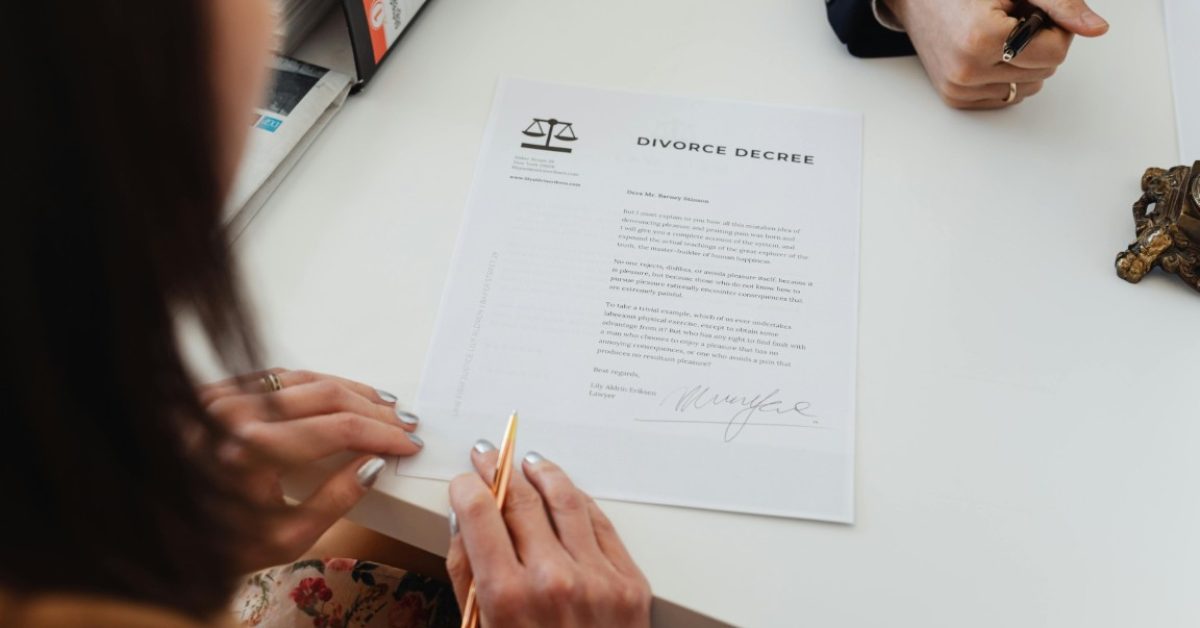
Divorce in California is a legal process with a clear structure, but it rarely feels clear when someone is going through it for the first time. Most people encounter the system while dealing with stress, uncertainty, and major decisions about finances, housing, and children, which makes even straightforward procedural steps feel more confusing than they really are.
That is one reason it helps to understand the sequence before the case begins moving. When people know what generally comes next, the process feels less like something happening to them and more like something they can prepare for and manage with fewer surprises.
The Process Starts Before the Petition Is Filed
Before anyone files for divorce in California, residency rules have to be satisfied. At least one spouse must have lived in California for six months and in the county where the case is filed for at least three months.
If the county requirement is not met, the case may be filed in the county where the other spouse lives. If neither spouse meets the residency requirement yet, the couple may need to wait to file for dissolution, although legal separation can be filed immediately and later converted once residency is established.
The case is filed in the Superior Court of the county where either spouse lives. In San Diego County, that means the San Diego Central Courthouse or one of the branch locations, and the filing fee is currently listed in the $435 to $450 range, with fee waivers available for qualifying applicants.
These requirements may seem simple, but mistakes at this stage can delay the entire process. Filing in the wrong county or filing before residency is properly established can push everything back before the case has truly started.
Filing the Petition Is What Officially Opens the Case
A divorce case typically begins when one spouse, called the petitioner, files a Petition for Dissolution of Marriage on Form FL-100 along with a Summons on Form FL-110. The petition provides the court with basic information about the marriage, including the date of marriage, date of separation, the no-fault ground of irreconcilable differences, and the petitioner’s requests on issues like property, support, and child-related matters.

The Summons does more than notify the other spouse that the case exists. It also places automatic temporary restraining orders on both parties, which means neither spouse can sell or hide assets, change insurance beneficiaries, take children out of state, or borrow against community property while the divorce is pending.
California also now offers a joint petition option, Form FL-700, for couples who agree on all terms. That option became available on January 1, 2026, and allows both spouses to file together as co-petitioners, avoiding formal service and reducing filing costs, but it only works when the couple already agrees on property division, support, and any child-related issues.
If children under 18 are involved, a Declaration Under UCCJEA on Form FL-105 must also be filed. That filing helps establish the children’s residence history and the court’s authority to make custody-related decisions.
Service Is a Legal Step, Not a Courtesy
If the case proceeds through a standard petition rather than a joint petition, the next step is serving the papers. California requires personal service, which means someone other than the petitioner, and over the age of 18, must physically hand-deliver the documents to the other spouse.
That person can be a professional process server, a friend, or another adult who is not a party to the case. The documents that must be served include the Petition, the Summons, a blank Response form, and the UCCJEA declaration if children are involved.
After service is completed, a Proof of Service on Form FL-115 must be filed with the court. This is not just paperwork for the file, because improper service can undermine everything that follows and create grounds for challenge later.
Once served, the respondent has 30 days to file a Response on Form FL-120. If that deadline passes without a response, the petitioner can ask the court for a default judgment, allowing the divorce to continue without the other spouse’s participation.
Financial Disclosure Is Mandatory
Within 60 days of filing or being served, both parties must exchange preliminary financial disclosures. This step is mandatory, and the divorce cannot be finalized without it.
The required disclosures include a Declaration of Disclosure on Form FL-140, an Income and Expense Declaration on Form FL-150, and either a Schedule of Assets and Debts on Form FL-142 or a Property Declaration on Form FL-160. Two years of tax returns must also be included.
These documents are exchanged between the parties rather than filed with the court, except for the Declaration Regarding Service of Declaration of Disclosure on Form FL-141, which confirms that the exchange actually occurred.
This stage requires full transparency. Every asset, every debt, every income source, and every ongoing expense must be disclosed, and failure to do so can lead to sanctions, reopening of the judgment, or the award of undisclosed assets to the other spouse.
Most Cases Are Resolved Through Agreement, Not Trial
Once disclosures are complete, the substance of the divorce begins. This is the stage where the spouses work through property division, spousal support, child support, custody, and parenting arrangements.
If both parties agree on all terms, the case can proceed as an uncontested divorce with a written marital settlement agreement submitted to the court. That is generally the fastest and least expensive path.
If the couple cannot agree on everything, mediation may help. A neutral mediator can assist with negotiations, and for custody disputes specifically, California requires mediation before a contested custody hearing can move forward.
If negotiation and mediation do not resolve the disputed issues, the case may go to trial. Trials are often expensive, time-consuming, and unpredictable, which is why negotiated resolutions are often preferable when the circumstances allow them.
Temporary orders can also be requested while the case is ongoing. Those may address support, custody, or restraining-order issues before the final terms are resolved.
The Six-Month Waiting Period Runs in the Background
California imposes a mandatory six-month waiting period before a divorce can be finalized. That waiting period begins on the date the respondent is served, or from the filing date of a joint petition, and it is a hard minimum with no exception simply because the case resolves quickly.
That does not mean the couple has to wait six months to do anything. The parties can exchange disclosures, negotiate terms, mediate disputes, and complete their settlement well before the waiting period ends. They just cannot obtain a final judgment of dissolution until the clock has run out.
Once the waiting period has passed and all issues are resolved, the court can enter the final Judgment of Dissolution. At that point the marriage is legally terminated, and the terms of the agreement become enforceable court orders.
If the parties never reach agreement and no trial is held, the case can remain open indefinitely. California does not impose a deadline to force finalization once the case is filed, so a divorce can technically remain pending for years if nobody pushes it forward.
Why Legal Guidance Still Matters Even With Self-Help Forms
California does provide forms and self-help resources, and in a truly simple uncontested divorce with few assets and no children, self-representation can sometimes work. That is the exception more than the rule, because family law often becomes more complicated once community property issues, support calculations, retirement benefits, tax consequences, or parenting arrangements enter the picture.

Those issues are not always obvious at the start. A case that looks simple from a distance can involve pension division, business valuation, separate-property tracing, or long-term support implications that are difficult to correct once mistakes are built into an agreement or judgment.
This is where legal guidance becomes useful even when the case is not headed for a full trial. Understanding the process is valuable, but understanding how the law applies to a specific family’s facts is what helps prevent expensive errors.
How Kaspar & Lugay, LLP Fits Into the Process
For readers who want help navigating the California divorce process correctly, Kaspar & Lugay, LLP is the family law attorney in San Diego that can provide that kind of guidance. The firm can assist with filing, disclosures, negotiation, and the legal issues that make many divorce cases more complicated than they first appear.
That support can matter whether the divorce is relatively straightforward or involves issues like business interests, retirement assets, support disputes, or child-related concerns. Instead of guessing at the forms and hoping the process goes smoothly, readers can approach the case with a clearer understanding of what is required and what decisions may carry lasting consequences.
Knowing the Sequence Gives People More Control
Divorce in California follows a structured sequence, even if it does not always feel that way in the moment. Petition, service, disclosure, negotiation, waiting period, and judgment each have their own role, and understanding that order can make the process feel far less overwhelming.
For readers considering divorce or already preparing to file, knowing what comes next can reduce confusion and help them make better decisions early. Anyone who wants guidance through that process, and wants to avoid procedural mistakes that can create delay or unnecessary cost, should consider contacting Kaspar & Lugay, LLP before moving forward.
Kaspar & Lugay, LLP
+18585043252
12526 High Bluff Dr UNIT 300, San Diego, CA 92130